The Vibe (Overview)
u/External_Mark_4848 rolled into r/PolyTrack with a simple flex: "cool kacky track." No explanation, no essay, no begging for upvotes — just two words that tell you everything you need to know. This is Kacky, and it's cool. Deal with it.
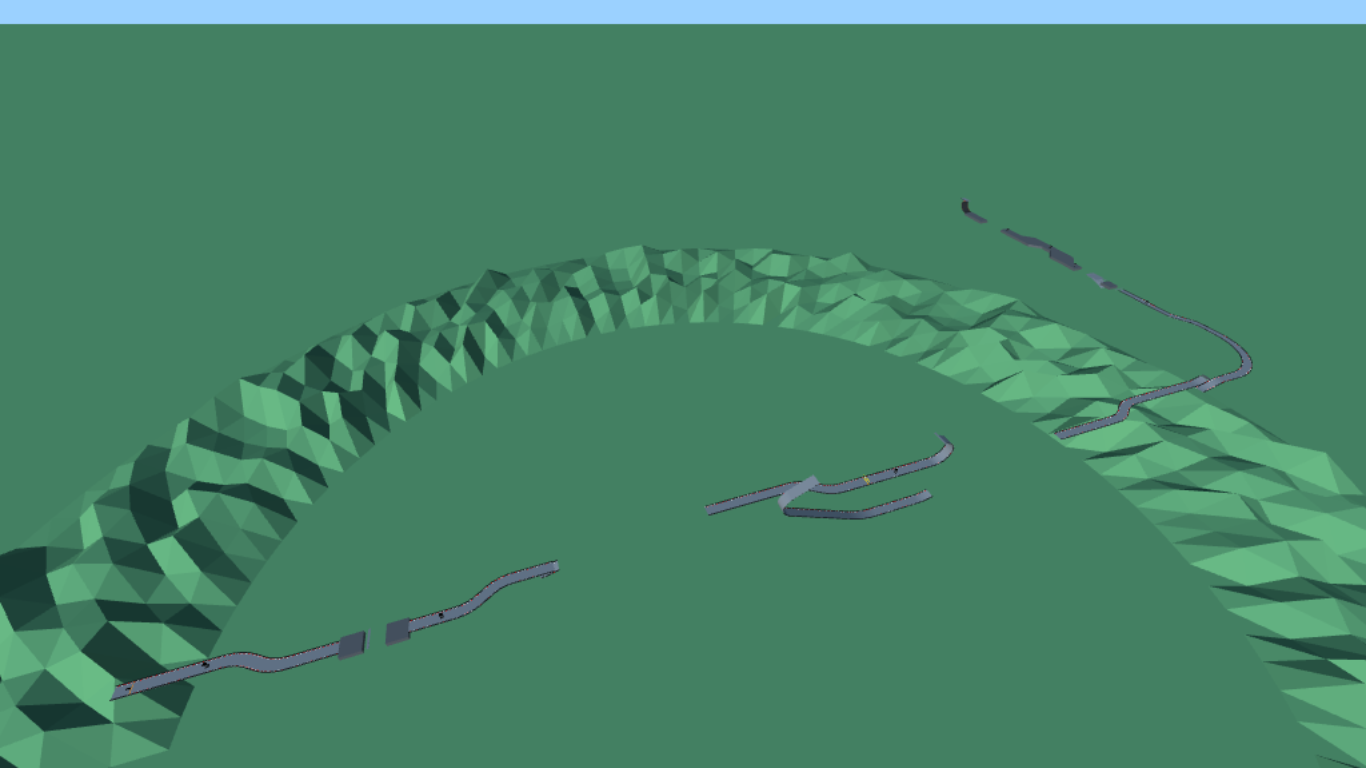
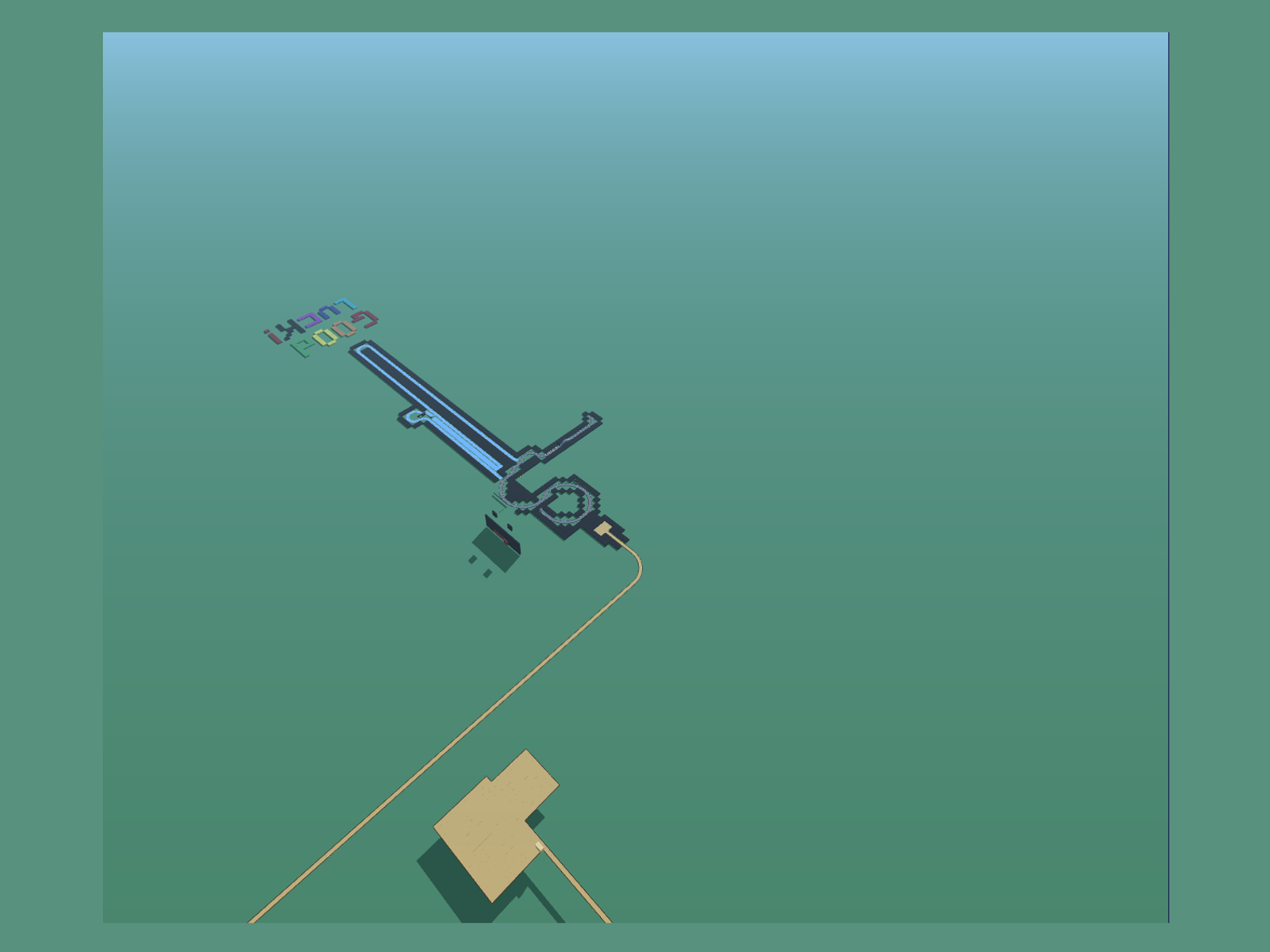
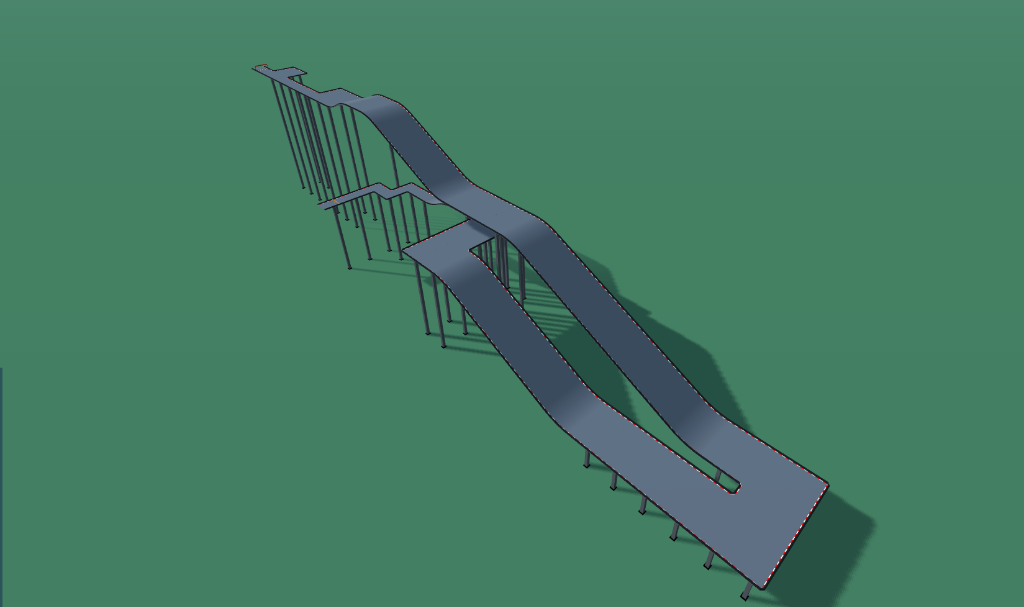
From the screenshot, the build is a long, narrow elevated highway stretching diagonally across the map — a steel-grey ribbon of road surface suspended high above the green ground on thin support columns that look about as structurally sound as wet spaghetti. The track features a distinctive split-path design: a main road narrows into a single lane before splitting into two parallel lanes that diverge and reconverge, creating a forced routing decision mid-run. The entire assembly sits at a steep downhill gradient, tilting from upper-left to lower-right like a ski jump that someone stretched out to an absurd length.
The visual language is pure industrial Kacky minimalism. Dark grey road, black support struts, zero decoration. The green void below is your only scenery, and it's also your punishment for any mistake. There are no guard rails, no bumpers, no safety nets — just a narrow strip of asphalt between you and a very long fall. The support columns are spaced far enough apart that the track looks like it shouldn't even be standing, adding a psychological layer of unease to what is already a precision driving challenge.
The Datamine (Nerd Stats)
Cracking open the PolyTrack2 payload:
- Format: PolyTrack2 (Base62 encoded).
- Data Payload: ~1,479 characters of compressed geometry — a moderately sized build that focuses its budget on the elevated highway structure and split-path routing.
- Architecture: Single elevated highway with a distinctive fork-and-merge lane design. High support columns create a dramatic elevated effect. The entire structure runs on a steep diagonal descent.
- Height: Significant elevation. The starting point sits well above ground level, and the track descends across its full length while maintaining substantial clearance above the green surface below.
- Visual Signature: Industrial grey road surfaces on thin black support columns. No decoration, no color accents. Pure Kacky minimalism with the green void as the only visual contrast.
- Creator Attribution: u/External_Mark_4848 — delivering clean Kacky energy with a build that's all substance and zero filler.
The ~1,479-character payload tells you this track prioritizes clean geometry over block density. The elevated highway structure requires significant geometry for the road surface, support columns, and the fork-merge lane system, but there's nothing wasted on aesthetics.
Sector Breakdown (Difficulty Analysis)
This earns a solid Hard rating. The combination of narrow lanes, zero guard rails, steep descent gradient, and a mandatory routing decision creates a three-phase gauntlet that demands precision at every stage.
- The Upper Descent: The opening section is a single-lane road tilting steeply downhill. The gradient accelerates you faster than you'd choose, and the narrow width means any lateral deviation sends you over the edge into the void. The support columns flash past on both sides, creating visual noise that makes it harder to judge your exact position on the road surface.
- The Fork Decision: Mid-track, the single lane splits into two parallel paths. This is the track's signature moment — you have to commit to left or right in a fraction of a second while carrying downhill momentum. Each fork has slightly different geometry: one might be wider but longer, the other tighter but shorter. Choosing the wrong fork for your speed isn't fatal, but it costs precious time.
- The Merge Zone: After the split, the two lanes reconverge into a single road. This transition is where most runs die. You're carrying all the speed from the descent, threading a narrowing corridor as two lanes compress back into one, and any misalignment means clipping the merge point geometry and bouncing off the track entirely.
- The Lower Descent: The final section continues the steep downhill run on a single lane. By this point you're at maximum velocity, the track is still narrow, and the finish demands you maintain discipline when every instinct screams to just survive.
Sweaty Speedrun Strats
- Upper Descent Center Lock: On the opening straight, don't try to steer — just point the car dead center and hold it there. The narrow width and steep gradient make any correction dangerous. The support columns are visual noise; ignore them entirely and focus only on the road surface edges. Your job is to be a perfectly centered arrow.
- Fork Pre-Selection: Decide which fork you're taking BEFORE you reach the split point. Watching replays and testing both paths will reveal which one is faster for your car choice and speed. Once you've made that call, commit fully — enter the fork wide (near the outer edge) and apex the inner wall of your chosen path to minimize distance.
- Merge Approach Angle: The reconvergence point has specific geometry that favors one entry angle. Whichever fork you chose, aim to exit it already aligned with the center of the merge corridor. Any lateral velocity at the merge point will deflect you into the narrowing walls. Kill your drift angle completely before the lanes reconnect.
- Terminal Velocity Management: On the final descent, you'll be at or near the car's top speed. At these velocities, even tiny steering inputs create massive lateral movement. Use the absolute minimum steering angle possible — think of it as breathing on the controls rather than turning. Any aggressive input at terminal velocity is an instant ejection from the track.
Meta Car Choice: The Formula Car is the pick for this elevated highway descent. You need maximum stability at high speed, and the Formula Car's aerodynamic downforce keeps the chassis planted on the narrow road surface even at the terminal velocities the steep gradient generates. The Sport Car lacks the high-speed stability for the final descent section, and the Rally Car's soft suspension will bounce on the support column junction points, potentially launching you off the narrow track. Formula Car's rigid, planted chassis is built for exactly this kind of high-speed precision corridor.
Track Overview
This hard stunt track is a good fit for players interested in stunt, highway, community styles. Use the tags below to find similar layouts or related challenges.
Track codes are community-sourced and may behave differently across game versions. If a code fails to import, try refreshing the game or a different browser before retrying.