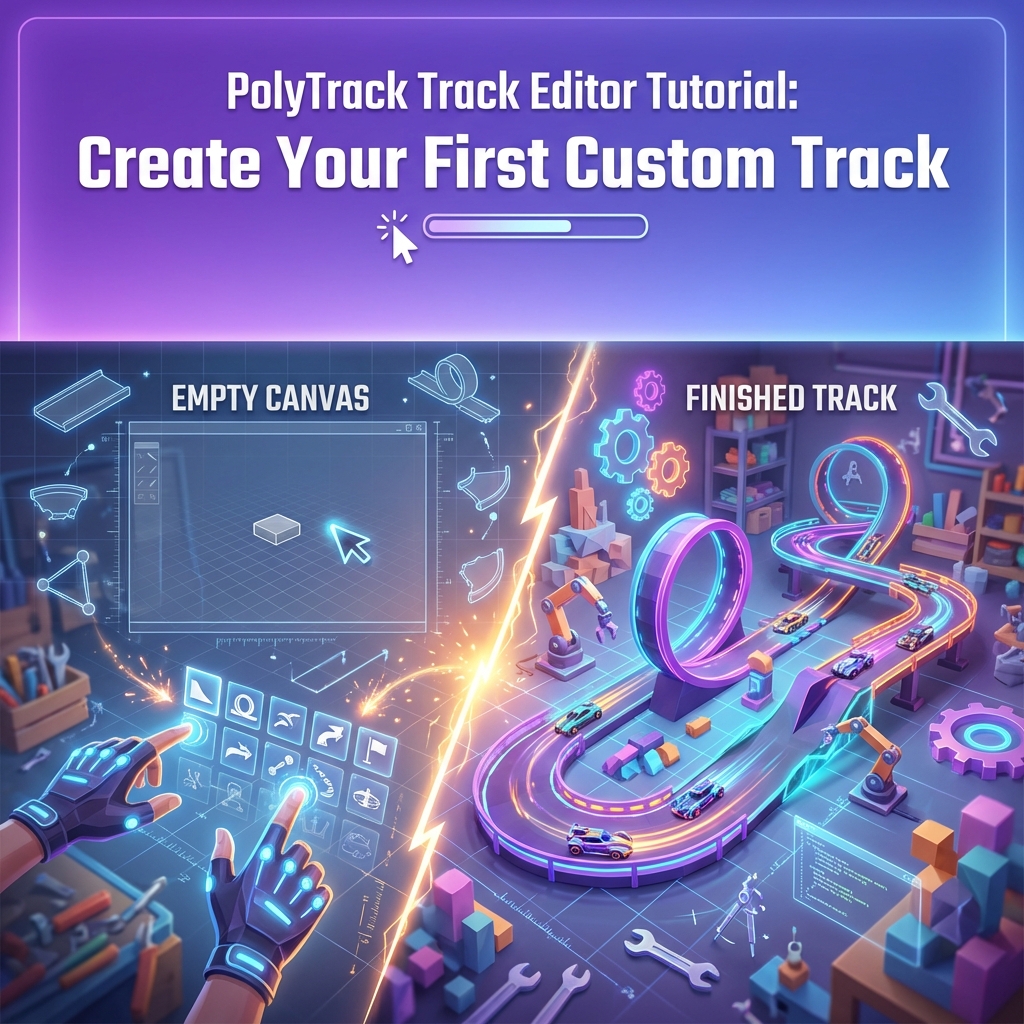
The first goal is not a huge track
Your first good PolyTrack map should not be a giant adventure. It should be a 25 to 40 second track with one idea, readable checkpoints, and a finish that players can reach before they lose patience.
Good creators do not start by asking "how hard can this be?" They start by asking "what should the player learn?"
Step 1: choose one driving idea
Pick one main idea:
- A clean full-speed line.
- A small gap jump.
- A banked turn.
- A wall ride.
- A technical braking corner.
- A short Kacky-style precision obstacle.
Do not combine five ideas in your first build. If players cannot describe the track in one sentence, the design is probably unfocused.
Step 2: build the spine
The spine is the main route without decoration. Build only the road pieces needed to drive from start to finish. Test the spine before adding scenery, side routes, or extra difficulty.
Use this test:
- Can you finish at medium speed?
- Can you see the next turn before you reach it?
- Does each checkpoint point toward the next skill?
- Is the finish visible or at least predictable?
If the answer is no, fix the route before adding anything else.
Step 3: make difficulty honest
Difficulty should come from execution, not confusion. A jump can be hard because the speed window is narrow. It should not be hard because the player cannot see the landing.
Add warning shapes before major skill checks:
- A short straight before a jump.
- A wider setup before a wall ride.
- A checkpoint before a high-risk section.
- A visual landmark before a blind turn.
Players will retry difficult sections if they believe the track is fair.