PolyTrack Speedrun Guide: Advanced Techniques & World Record Strategies
Master the art of speedrunning in PolyTrack with our comprehensive guide. Learn advanced techniques, optimal racing lines, frame-perfect inputs, and strategies used by world record holders.
P
AuthorPolyTrackCodes Team
PublishedDecember 30, 2025
Read Time25 min
Advertisement
PolyTrack Speedrun Guide: From Casual Laps to World Records
So you've mastered the basics of PolyTrack and you're tired of seeing your name at the bottom of the leaderboards.You want to know how those top players shave literal seconds off times that already feel impossible.Welcome to the deep end.
Speedrunning PolyTrack isn't just about holding down W. It's about dancing with a physics engine that rewards precision, punishes hesitation, and has a few secrets for those willing to look.Let's break down how to actually compete for a world record.
Getting Into the Zone: The Speedrun Mentality
Before we talk about steering angles, let's talk about your brain. Speedrunning is 90% persistence.
* ** Embrace the Reset:** You're going to hit `R` more than any other key. Don't let a crash frustrate you; every failure is just data.
** Analyze Your Ghosts:** Don't just race against yourself. Watch the top replays on the leaderboard. Where are they braking? Where are they staying wide?
** Small Wins Matter:** Don't aim for the top spot on day one. Focus on beating your own best time by 0.1 seconds. Those tenths add up to seconds.
The Perfect Line: Cutting Seconds Every Lap
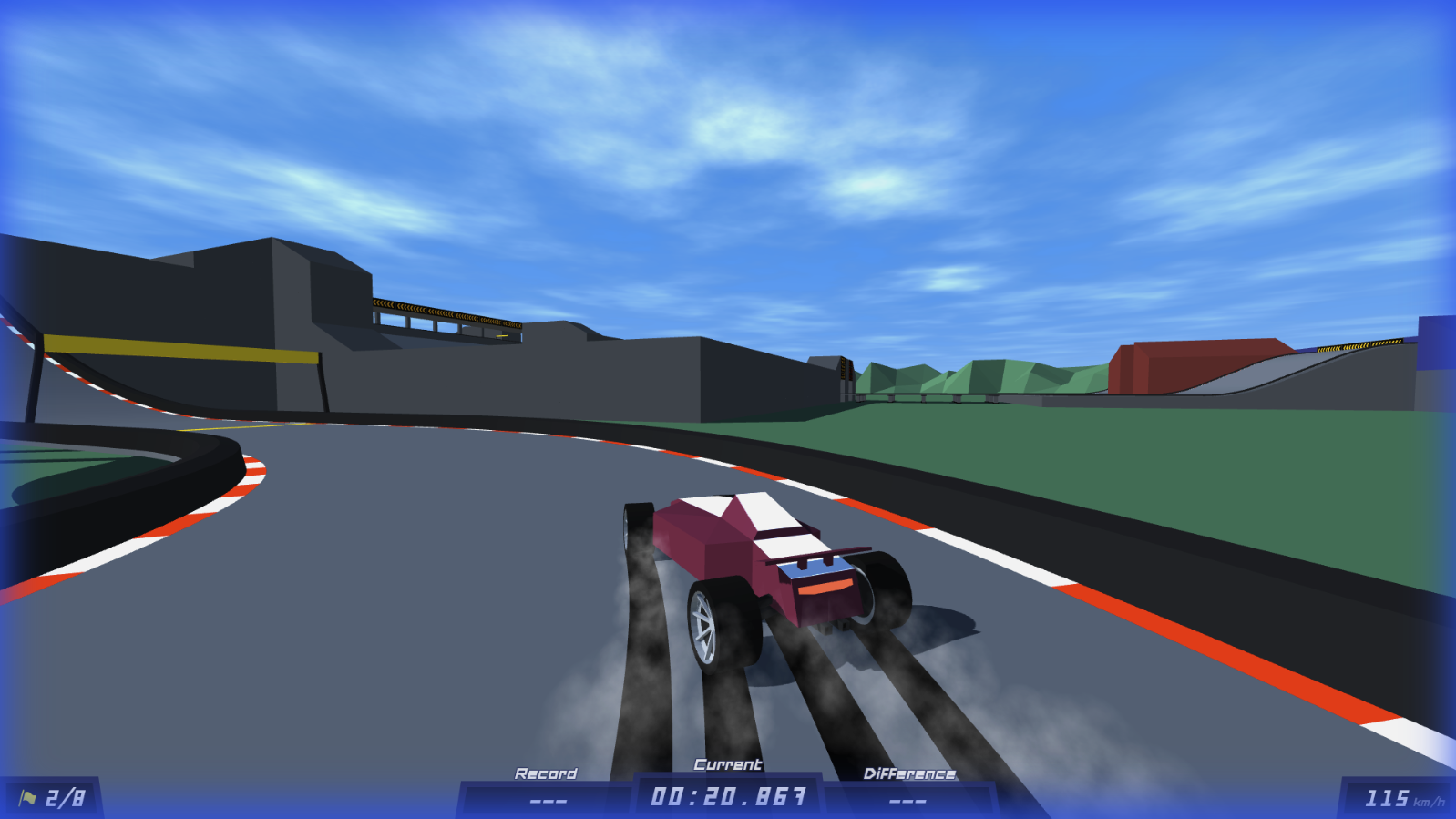
The "Racing Line" is the path that lets you keep your speed as high as possible while covering the shortest distance.
The Classic Out - In - Out
For most corners, you want to start wide(Out), cut close to the inner corner at the apex(In), and drift wide again on the exit(Out).This effectively "straightens" the turn, meaning you don't have to slow down nearly as much.
Momentum is Everything
In PolyTrack, losing speed is easy; gaining it back is hard.A single wall tap doesn't just cost you the time of the impact—it costs you the acceleration time to get back to top speed.
* ** The 3 - Second Rule:** A bad landing or a wall tap can cost you up to 3 seconds of potential distance over the course of a lap.
** Avoid Over - Braking:** Many corners can be handled by just letting off the gas for a split second(Lift - Off Oversteer) rather than hitting the brakes.
Beyond Simple Driving: Advanced Techniques
Once you've got the lines down, it's time to exploit the physics.
Air Control Mastery
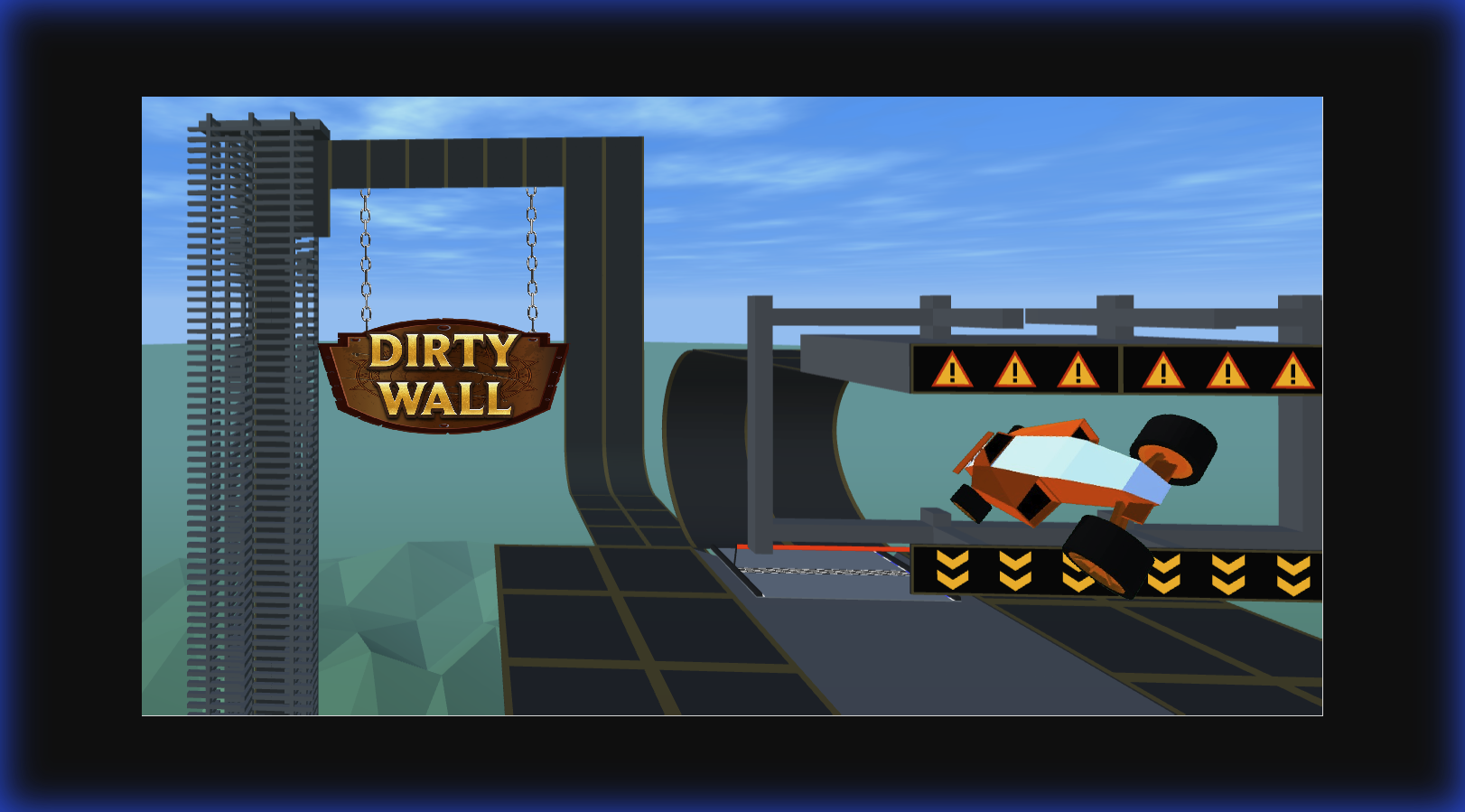
You'll spend a lot of time in the air. What you do there determines if you land like a pro or a brick.
* ** Pitching perfect:** Use `W` and `S` in the air to match your car's angle to the landing ramp.
The Flat Land: Ideally, all four wheels should hit at once. If your front hits first, you might bounce; if the back hits first, you lose forward momentum.
Wall Riding and Pipe Mechanics
On some tracks, the fastest way through isn't the floor—it's the wall.
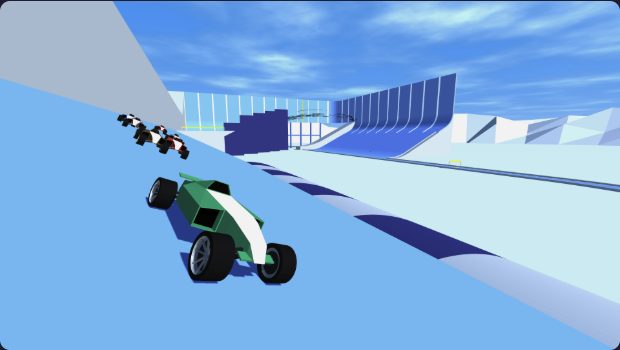
The Centrifugal Trick: In tunnels or half-pipes, climbing the wall lets you maintain a straighter line through a curve. Keep your speed high to stick to the surface.
Controlled Exits: Don't just fall off the wall. Gradually steer back down to the track to keep your car stable.
How the Pros Practice
You don't become a master by just doing full laps.
Segment Training: If you're struggling with one specific jump or turn, spend 20 minutes doing just that section.
Ghost Hunting: Turn on the ghost of someone slightly faster than you. See where they are pulling ahead.
Fresh Eyes: If you hit a plateau, walk away. Muscle memory needs a break to reset. Come back tomorrow, and you'll probably beat your PB in three tries.
Advertisement
Conclusion: Your Path to the Top
Becoming a world-class PolyTrack speedrunner doesn't happen overnight. It's a journey of thousands of resets, pixel-perfect landings, and the pure thrill of finally nailing that one corner you've been struggling with.
Check out the Expert Tracks when you're feeling brave.
Join the Discord and show off your best runs.
We'll see you at the top of the leaderboard. 🏎️
2026 Update: New Speedrun Strategies for PolyTrack 0.6.0
Updated February 2026
PolyTrack 0.6.0 introduced features that directly affect speedrunning technique and analysis.
Using the New Replay System for Speedrun Analysis
The 0.6.0 replay upgrade — advanced graph window and frame-by-frame stepping — is purpose-built for speedrunners.
The graph window shows your speed, throttle, brake, and steering inputs synchronized to playback. For speedrunning, this means:
Find your exact braking points: Step frame-by-frame to the precise frame you start braking. Compare to the world record ghost's braking frame. Even 3–5 frames of earlier braking = 0.05–0.08s lost, per corner.
Identify mid-corner throttle lifts: The speed graph exposes any throttle hesitation mid-corner that you may not even consciously feel while driving.
Apex verification: Pause at any corner apex and see your speed. Compare to ghost. Any gap here tells you your line or entry technique has room.
Recommended workflow for record attempts:
Complete 5 runs
Load the fastest in replay, open the graph
Note the 3 biggest speed dips vs. your target
Frame-by-frame through each dip to identify the exact input causing it
Community tracks from 2026 increasingly feature banked curves. The speed implications for speedrunners are significant:
Banked curves can be taken at 30–60% higher speed than equivalent flat corners. Most players instinctively brake before banked sections — world record holders maintain near-full speed.
Technique for banked curve speedrun:
Identify the entry transition (flat → banked)
Note where you're currently braking
In replay, check the world record ghost — they likely brake much later or not at all
Progressively delay your braking point by 5 frames per attempt until you find the limit
On the exit transition (banked → flat), gentle brake feather prevents understeer
Potential time gains: On a track with 4 banked curves, mastering the technique could yield 0.4–0.8 seconds per lap vs. treating them like flat corners.
New Official Tracks: Winter 5 and Desert 5
Two new official tracks arrived with 0.6.0: Winter 5 and Desert 5. These are fresh speedrun categories with no established dominant strategies yet — ideal timing to set early records.
Both tracks feature the new banked curve components and are designed with aggressive high-speed flow in mind. The first speedrunners to master the banked sections on these tracks will have a significant advantage in establishing early records.
Strategy: Study the track layouts first to identify all banked sections before your first serious attempt. Knowing where the banks are lets you plan your braking strategy in advance rather than discovering them mid-run.
The PolyTrackCodes Team is a small group of PolyTrack players who curate, import, and test community track codes. We load every track we publish in the game to confirm the code works, tag its category and difficulty from how it actually plays, and write our guides from hands-on experience with the editor and leaderboards.