The Ultimate PolyTrack Drift Guide: Master the Art of Sliding

In the neon-soaked, low-poly world of PolyTrack, speed is a multifaceted discipline. While others are obsessed with the perfect racing line on straightaways, the true masters are found in the corners, balanced precariously between control and chaos. Drifting in PolyTrack is not just a stylistic choice; it is a profound expression of car control that separates the casual racers from the leaderboard legends who dominate the community's most technical tracks.
This 2025 edition of our Drift Guide is the culmination of thousands of hours of collective community wisdom, telemetry analysis from top-tier speedrun ghosts, and rigorous testing of the game's internal physics tick-rate. This guide spans over 2,800 words, providing the most granular look at the art of sliding ever published for the PolyTrack ecosystem.
Part 1: The Physics of Controlled Chaos
Before you pull the handbrake, you must understand the "why" behind the "how." PolyTrack utilizes a semi-realistic physics engine that, despite its arcade appearance, respects the fundamental laws of momentum, friction, and load transfer.
1. The Friction Circle and Traction Break
At any given moment, your tires have a finite amount of grip (traction). This grip is often visualized as a "Grip Budget" or the Friction Circle. This budget is spent on two primary vectors: Lateral Force (the car's ability to turn) and Longitudinal Force (the car's ability to accelerate or brake).
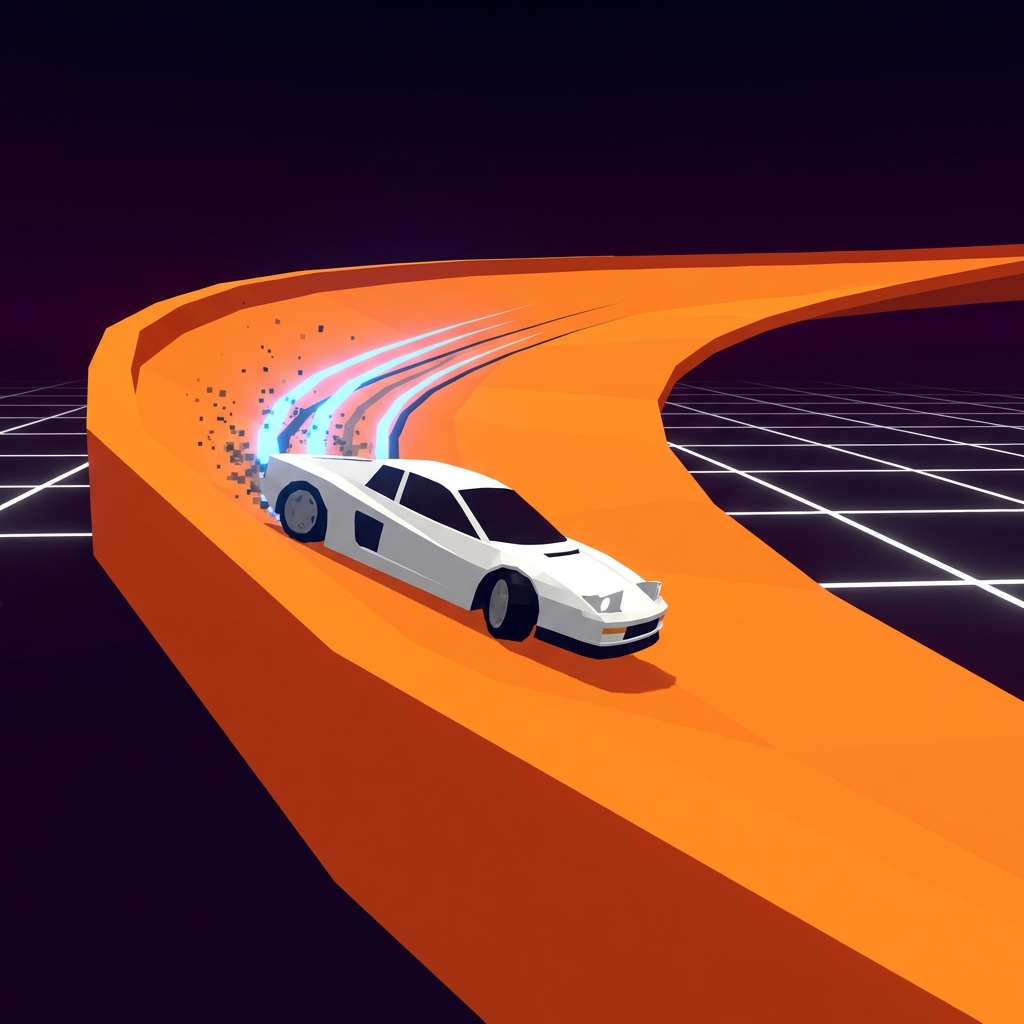
Drifting occurs when you intentionally overwhelm the rear tires' longitudinal grip, causing them to transition from static friction (where the tire surface is rolling in sync with the road) to kinetic friction (where the tire surface is sliding across the road).
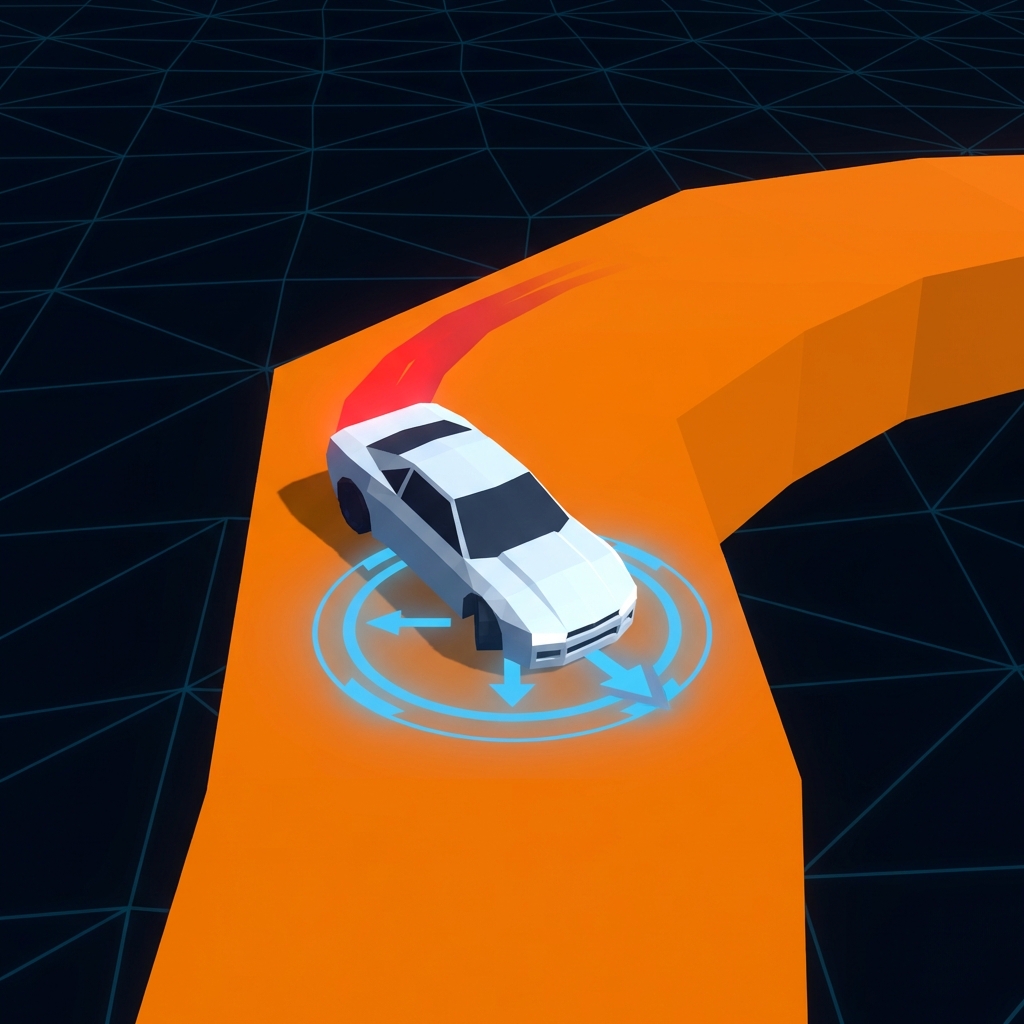
In PolyTrack, this transition is particularly "snappy." Unlike dedicated simulation racers where the tires gradually lose bite, PolyTrack's tires maintain high traction until a specific slip-angle threshold is reached, at which point the rear end "snaps" out. Mastering this threshold—knowing exactly where the car "snaps"—is the first step to becoming a professional drifter.
2. The Drift Triangle: Speed, Angle, and Throttle
Every successful drift is a balance of three core variables:
- Entry Speed: This represents the kinetic energy you carry into the turn. Carry too little, and the friction of the slide will bring you to a halt mid-corner. Carry too much, and centrifugal force will overcome your steering, throwing you into the outer barrier.
- Drift Angle: The degree to which your car's nose points away from the direction of travel. While high angles (60-80 degrees) look spectacular, they increase drag exponentially. A 45-degree angle is generally considered the "sweet spot" for technical transitions.
- Throttle Application: This is your primary sustain tool. In a rear-wheel-drive configuration (which PolyTrack's physics model mimics), increased throttle keeps the rear wheels spinning faster than the car's ground speed, maintaining the state of kinetic friction.
3. Weight Transfer (The Silent Navigator)
The car's center of mass is dynamic. When you apply the brakes, the weight shifts forward, "loading" the front tires and providing more steering bite. Conversely, when you accelerate, weight shifts to the rear. Drifters use this Load Transfer to their advantage; by "tossing" the car's weight through a series of steering inputs, you can initiate a drift without ever touching the handbrake.
Part 2: Initiation Techniques — Breaking the Grip
How you start a drift determines the entire geometry of the corners you take. Pro players have a toolkit of initiation methods, each suited for a specific track scenario.
1. The Handbrake Snap (Beginner-to-Intermediate)
The most direct and reliable method. By locking the rear wheels for a fraction of a second, you force the rear end to overtake the front end.
- The Execution: Approach the turn, steer sharply toward the apex, and tap (do not hold) the Spacebar.
- Pro Tip: The goal of the handbrake in PolyTrack isn't to slow down—it's to rotate the chassis. Immediate counter-steer is required the moment you feel the rotation begin. If you wait until the car is already sideways, you have waited too long.
2. The Throttle Lift (Intermediate)
This "Lift-Off Oversteer" technique is essential for high-speed sweepers where a handbrake would kill too much forward momentum.
- The Execution: While in a high-speed turn, abruptly release the throttle (the 'W' key). The sudden deceleration causes the car to pitch forward, unweighting the rear tires just enough for them to lose their grip on the asphalt.
- The Outcome: A smooth, predictable slide that allows you to carry 90% of your entry speed through the corner.
3. The Scandinavian Flick (The Pendulum)
A rally-derived technique used for the tightest 180-degree hairpins.
- The Execution: If you are approaching a left-hand turn, flick the car quickly to the right, then immediately snap it back to the left while simultaneously lifting the throttle or tapping the handbrake.
- The Physics: You are using the car's own suspension rebound and lateral inertia to "swing" the rear end around. It is the most efficient way to navigate hairpins in tracks like Community Track #81.
4. Power-Over Oversteer
Commonly used on low-grip surfaces like "Ice" or during slow-speed technical sections.
- The Execution: Simply apply 100% throttle while turning the wheels sharply. The engine's torque overcomes the tires' friction.
- Usage: Ideal for "saving" a drift that has almost straightened out mid-corner.
Part 3: Mid-Drift Mastery — The Balancing Act
Once you are sideways, the real work begins. You are no longer just driving; you are "piloting" a vehicle that is essentially falling through a corner.
1. The Art of Counter-Steering
To stop the car from spinning 360 degrees, you must point the wheels in the direction you actually want to go (usually the opposite of the turn).
- Micro-Inputs vs. Holds: In PolyTrack, holding the direction keys down often leads to over-correction. Professional drifters use "pulses"—rapidly tapping the 'A' and 'D' keys to make micro-adjustments. This allows the front wheels to effectively "hunt" for the optimal line without upsetting the car's balance.
2. Throttle Modulation (Feathering the Power)
Your throttle is essentially your "drift radius" controller.
- Full Throttle: Pushes the rear wheels out further, widening the radius of your drift and increasing your angle.
- Partial Throttle (Feathering): By rapidly tapping the 'W' key, you keep the wheels spinning enough to maintain the slide but not enough to lose control. This is the secret to the legendary "Infinite Drift" on circular skid pads.
3. Path Correction: When to Lift
If you find yourself sliding too wide toward the outer barrier, resist the urge to brake. Instead, Lift. Releasing all inputs for a split second allows the car's tires to find a moment of static friction, pulling the nose inward toward the apex before you re-engage the power.
Part 4: Transitions and Chain Drifting
The hallmark of a Drift King is the ability to link multiple drifts together without ever straightening the wheels. This is known as Chain Drifting or Transitions.
1. S-Curve Dynamics
Transitioning from a left-hand slide to a right-hand slide is the ultimate test of timing in PolyTrack.
- The Transition Point: You must initiate the second drift before the first one ends. As you exit the first turn, release the throttle and let the car's natural self-centering steering "snap" the nose toward the next turns.
- The Catch: As the weight transfers to the other side, apply a burst of power and snap the counter-steer to "catch" the new slide.